
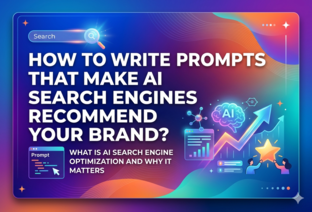
A new era of search is upon us. AI-powered search engines like Google’s AI Overviews, Perplexity AI, ChatGPT Search, and Microsoft Copilot are fundamentally changing how people discover brands, products, and services online. Instead of presenting a list of blue links, these AI systems synthesize information and deliver direct answers — and increasingly, they recommend specific brands and products. The question every marketer must now ask is: how do you ensure your brand gets recommended by AI search engines? This guide provides the definitive answer. AI search engine optimization. For expert help implementing these strategies, explore Astute Agency’s services.
AI search engine optimization is rapidly becoming the most important skill for any brand that wants to stay visible in the age of generative search.

Understanding How AI Search Engines Work
Effective AI search engine optimization starts with building topical authority and creating content that AI systems trust and cite.
To optimize for AI search recommendations, you first need to understand how these systems work. AI search engines do not simply index keywords like traditional search engines. They are large language models that read, understand, and synthesize vast amounts of web content to form comprehensive answers to user queries.
Unlike traditional SEO, AI search engine optimization requires your content to directly answer conversational queries in a clear, structured format.
When a user asks an AI search engine ‘What is the best digital marketing agency in India?’, the AI does not just match keywords — it reads and evaluates multiple authoritative sources, reviews, mentions, and structured data to form a reasoned recommendation. Your goal as a marketer is to ensure your brand appears in the content these AI systems trust and cite.
This new discipline — sometimes called Generative Engine Optimization (GEO) or AI SEO — is rapidly becoming one of the most important skills in digital marketing. Learn how Astute Agency stays ahead of AI search trends.
1. Create Comprehensive, Authoritative Content
AI search engines heavily favor content that is comprehensive, well-structured, and demonstrably authoritative. Thin, superficial content that barely covers a topic will not earn citations or recommendations from AI systems. You need to create content that genuinely serves as the best resource available on a given topic.
This means writing long-form guides, in-depth analyses, original research, and expert-level explanations on topics relevant to your industry. Each piece of content should be so thorough and well-organized that an AI system evaluating multiple sources would naturally choose yours as the most complete and reliable.
- Aim for 2,000+ words for cornerstone content pieces
- Cover topics comprehensively — include related subtopics, FAQs, and expert perspectives
- Cite credible sources, data, and statistics to support your claims
- Include original insights that cannot be found elsewhere
- Update content regularly to maintain freshness and accuracy
2. Optimize for Question-Based Queries
AI search engines are built to answer questions. Users interact with them in a conversational, question-based manner. Your content strategy must therefore be heavily focused on answering the specific questions your target audience is asking.
Use tools like Google’s People Also Ask, AnswerThePublic, and SEMrush’s Topic Research to identify the questions most frequently asked in your industry. Then create dedicated content that provides the clearest, most authoritative answer to each question. The more precisely your content matches the question a user is asking, the more likely an AI system is to recommend your content — and by extension, your brand — in its response.
Structure your content with clear question-based headings, concise direct answers followed by supporting detail, and use FAQ sections at the end of every piece. Contact Astute Agency for an AI content strategy.
3. Build Topical Authority
AI search engines reward brands and websites that demonstrate deep expertise across a specific topic area — what SEOs call ‘topical authority’. Rather than creating scattered content on diverse topics, build a comprehensive content hub around your core areas of expertise.
For example, if you are a digital marketing agency, create pillar pages on SEO, social media marketing, email marketing, and content marketing — then build extensive cluster content linking back to each pillar. This interconnected content architecture signals to AI systems that your website is the authoritative resource on digital marketing, making it more likely to be recommended.
- Create a content cluster strategy around 3-5 core topic pillars
- Build internal links between related content pieces
- Consistently publish new content within your topic clusters
- Earn backlinks from authoritative sites in your industry
- Use consistent terminology and language that matches industry standards
4. Optimize Your Brand’s Digital Footprint
AI search engines synthesize information from multiple sources beyond just your website. They read industry publications, review sites, social media, news mentions, and third-party databases. To maximize your brand’s chances of being recommended, you need to optimize your entire digital footprint.
- Maintain an active, keyword-optimized Google Business Profile
- Build a strong presence on industry review platforms (G2, Clutch, Trustpilot)
- Earn coverage in authoritative industry publications and news sites
- Ensure consistent Name, Address, and Phone (NAP) data across all directories
- Build a strong LinkedIn Company Page with detailed service descriptions
- Get featured in ‘best of’ lists and industry roundups
5. Implement Structured Data Markup
Structured data — also known as schema markup — is code added to your website that helps search engines and AI systems understand what your content is about. AI search engines use structured data to quickly identify key information about your business, products, services, reviews, and more.
Implement the following schema types to improve your visibility in AI search results:
- Organization Schema: Business name, description, contact info, social profiles
- Product Schema: Product names, descriptions, prices, and reviews
- FAQ Schema: Question and answer pairs from your content
- Article Schema: Author, publish date, and topic for all blog content
- LocalBusiness Schema: Essential for local businesses targeting geographic queries
- Review Schema: Aggregate ratings and review counts from verified customers
6. Build a Strong Brand Entity
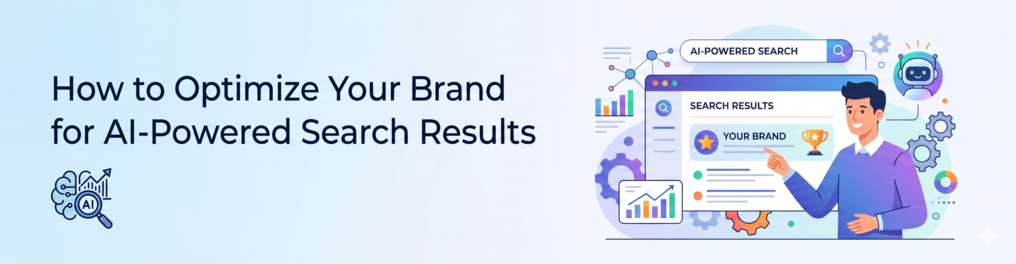
AI search engines use the concept of entities — recognized real-world objects and concepts — to understand the web. Google’s Knowledge Graph and similar AI systems maintain entity databases that link brands to their attributes, reputation, and expertise. Getting your brand recognized as a trusted entity is crucial for AI search recommendations. See how Astute Agency builds brand authority for clients.
Building a strong brand entity requires:
- Consistent brand mentions across authoritative websites
- A well-maintained Wikipedia page or similar reference entry if applicable
- Active profiles on major professional platforms (LinkedIn, Crunchbase, industry directories)
- Consistent use of branded keywords and descriptions across all platforms
- Earned media coverage in high-authority publications
7. Create Content That AI Systems Trust
Not all content is equally trustworthy from an AI system’s perspective. Content that demonstrates E-E-A-T — Experience, Expertise, Authoritativeness, and Trustworthiness — is significantly more likely to be cited and recommended by AI search engines.
- Author all content under named experts with verifiable credentials
- Include detailed author bios with relevant qualifications and experience
- Cite primary sources, research studies, and industry data
- Include original data, case studies, and first-hand insights
- Keep content regularly updated — include last-reviewed dates
- Earn author recognition through guest posting on authoritative platforms
8. Prompt Engineering Lessons for Marketers
Understanding how AI search prompts are structured helps you optimize your content to match them. When users search with AI, they tend to use natural language, comparative queries (best vs alternatives), specific qualifying phrases (for small businesses, in India, under budget), and action-oriented questions.
Build your content to directly address these prompt structures. Create comparison pages, location-specific landing pages, budget-conscious guides, and scenario-based content that mirrors how users actually prompt AI search engines.
Answer Engine Optimization (AEO) for Featured AI Responses
Answer Engine Optimization represents the discipline of structuring your content specifically to be selected and surfaced by AI answer engines as the authoritative response to user queries. Unlike traditional SEO which aims to achieve high rankings in a list of results, AEO targets direct inclusion in AI-generated answers — the synthesized responses that appear at the top of AI search results pages before any traditional links.
The fundamental principle of AEO is aligning your content architecture with the question-answering behavior of large language models. AI answer engines are trained to find the most direct, accurate, and well-supported answer to a query. Content that is structured with clear question-and-answer patterns, supported by authoritative citations, and written in clear declarative language is consistently preferred by AI systems over content that requires significant inference or synthesis to extract the core answer.
Structured Answer Formats That AI Engines Prefer
Research into AI search behavior reveals consistent patterns in the types of content formats that earn AI citations. Definition-first content structure — where a concept is defined clearly and concisely at the beginning of a section before elaborating — mirrors the structure AI systems prefer for generating answers. Step-by-step procedural content with numbered instructions is highly favored for how-to queries. Comparison tables that present information in structured, scannable formats are frequently reproduced in AI answers to comparative queries.
The implication for content creators is clear: every major section of your content should be architected to answer a specific question that your target audience is likely to ask an AI search engine. Begin sections with direct answers rather than background context. Use clear, active language that can be cleanly extracted and quoted. Support each answer with credible evidence. This question-answer architecture simultaneously serves human readers who scan for specific information and AI systems that need to identify and extract precise answers.
Geographic and Local Optimization for AI Search (GEO)
Geographic Engine Optimization addresses the growing importance of geographic context in AI search results. As AI search systems become more sophisticated in their understanding of local intent, brands that have optimized their digital presence for geographic relevance gain significant advantages in local and regional AI search queries.
For businesses targeting specific geographic markets, this means creating dedicated location-specific content that goes beyond simple keyword insertion to provide genuinely valuable local information. A digital marketing agency in Mumbai should create comprehensive content about the Mumbai startup ecosystem, local consumer behavior patterns, city-specific case studies, and regionally relevant marketing insights. This depth of local content signals genuine geographic authority to AI systems evaluating which source best answers a locally-scoped query.
Local structured data plays an increasingly important role in geographic AI optimization. Maintaining accurate and comprehensive local business listings across Google Business Profile, Bing Places, Apple Maps, and regional directories provides AI systems with verified geographic data points that reinforce your location-based relevance. The consistency of business information across these platforms is a trust signal that AI systems weigh when determining which local businesses to recommend in geographically targeted queries.
Schema markup is a foundational element of AI search engine optimization — it helps AI systems quickly understand what your brand offers.
AIEO: Artificial Intelligence Experience Optimization
Artificial Intelligence Experience Optimization (AIEO) is an emerging discipline that extends beyond content optimization to consider the entire brand experience as perceived and processed by AI systems. AIEO recognizes that AI search engines do not only read your website content — they synthesize information from your entire digital footprint including news coverage, social media activity, customer reviews, employee testimonials, and third-party analyses to form a comprehensive understanding of your brand.
Brands with strong AIEO practices proactively manage their information ecosystem to ensure AI systems form accurate, positive, and comprehensive impressions of their business. This involves monitoring and responding to online reviews, correcting factual inaccuracies in third-party coverage, maintaining consistent messaging across all digital channels, and actively generating positive earned media that reinforces key brand attributes. The goal is not manipulation but rather ensuring that the authentic story of your brand is accessible, consistent, and compelling across all the sources that AI systems consult.
Measuring and Tracking AI Search Visibility
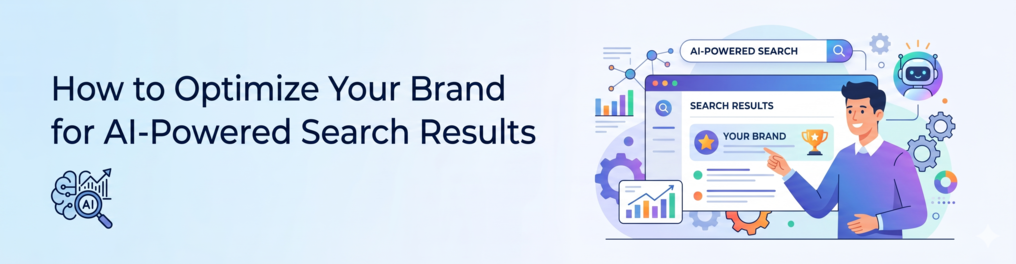
One of the most pressing challenges marketers face with AI search optimization is measurement. Traditional SEO metrics — keyword rankings, organic click-through rates, and impression data from Google Search Console — capture performance in traditional search results but do not directly measure visibility in AI-generated answers. Developing a framework for tracking AI search visibility requires combining traditional metrics with new approaches specifically designed for the AI search environment.
Brand mention monitoring tools like Brandwatch, Mention, and Google Alerts can be configured to track when your brand or content is cited in published AI search responses. While not comprehensive, this approach captures publicly documented AI citations and helps identify which content pieces and topic areas are generating the most AI search visibility. Supplementing this with regular manual testing — querying relevant topics in AI search engines and noting which sources are cited — provides qualitative intelligence that quantitative tools cannot yet deliver at scale.
Traffic quality analysis offers another indirect measure of AI search impact. Visitors arriving from AI search engines typically exhibit distinctive behavioral patterns: they tend to have high specificity of intent, arrive on deep content pages rather than homepages, and demonstrate above-average engagement rates because the AI has already pre-qualified their interest in your content. Segmenting your analytics data to identify these behavioral signatures can reveal the business impact of AI search visibility even before direct citation tracking becomes universally available.
Establishing a baseline measurement practice now — before AI search tracking tools mature — positions you to demonstrate the ROI of your GEO and AEO investments as the measurement landscape evolves. Document your current organic traffic composition, note which queries generate AI Overview appearances in Google Search Console, and create a regular cadence of manual AI search testing across your most important keyword clusters. This disciplined measurement approach ensures that your AI search optimization efforts are grounded in data and continuously refined based on what is actually driving measurable business outcomes rather than vanity metrics.
The brands that build robust AI search measurement practices today will have a significant advantage as AI search continues to displace traditional search traffic. Those who wait until measurement tools are perfect will find themselves years behind competitors who invested in tracking and optimization from the early stages of this transition. The competitive landscape of AI search visibility is being established right now, and the window for first-mover advantage is open but closing steadily as more sophisticated marketers recognize and act on this opportunity.
Brands that invest in AI search engine optimization today will have a decisive competitive advantage as generative search becomes the new normal.
Building a strong brand entity is at the core of modern AI search engine optimization and directly influences how often AI recommends your brand.

Optimizing for AI-powered results.
Generative Engine Optimization.
Yes, it helps AI read content.
Deep expertise in one topic area.
Based on trust and authority.
Experience, Expertise, Authority, Trust.
Yes, reviews influence results.
2000+ words for best results.