
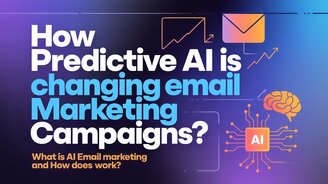
Email marketing has long been one of the highest ROI channels in digital marketing. But the traditional approach — blasting the same email to your entire list and hoping for the best — is rapidly becoming obsolete. Predictive AI is fundamentally transforming how marketers craft, send, and optimize email campaigns. In this article, we explore how artificial intelligence is revolutionizing email marketing and how your brand can harness these capabilities. For AI-powered marketing solutions, explore what Astute Agency offers.
Predictive AI email marketing is revolutionizing the way brands connect with their audience — making every campaign smarter, faster, and more personalized than ever before.
What is Predictive AI in Email Marketing?
Predictive AI in email marketing refers to the use of machine learning algorithms and data analytics to anticipate customer behavior, personalize content, and optimize campaign performance before an email is even sent. Rather than relying on past performance data alone, predictive AI models analyze vast datasets — browsing history, purchase patterns, engagement signals, demographic data, and real-time behavior — to forecast what a specific customer is likely to do next after AI email marketing campaigns, email marketing automation AI, machine learning email personalization.
The result is an email marketing experience that feels deeply personal, timely, and relevant to each individual recipient — dramatically improving open rates, click-through rates, and ultimately, revenue.
1. Predictive Send-Time Optimization
Predictive AI email marketing one of the most impactful applications of predictive AI in email marketing is send-time optimization. Traditional email marketing sends campaigns at fixed times — Tuesday morning at 10 AM, for example — based on general industry benchmarks. Predictive AI changes this entirely.
AI algorithms analyze each subscriber’s past email engagement data to identify the exact time of day and day of the week when that individual is most likely to open an email. Instead of sending everyone the same email at the same time, the AI queues each subscriber’s email to arrive at their personal optimal moment.
Studies show that send-time optimization powered by AI can improve email open rates by 15-25% on average. For a list of 100,000 subscribers, that represents tens of thousands of additional opens per campaign. Discover how Astute Agency implements AI email strategies.
2. Predictive Segmentation
Predictive AI email marketing effective email marketing has always required good segmentation — dividing your email list into groups based on shared characteristics and sending relevant content to each group. Predictive AI takes segmentation to an entirely new level.
Instead of static segments based on demographics or past purchases, AI-powered predictive segmentation continuously updates in real-time based on behavioral signals. The AI can identify micro-segments like ‘customers showing early signs of churn’, ‘high-value customers likely to upgrade’, or ‘lapsed customers who are starting to re-engage’.
This dynamic, behavior-driven segmentation ensures every email campaign reaches exactly the right people with exactly the right message at exactly the right time — a level of precision that was impossible with manual segmentation.
3. AI-Powered Subject Line Optimization
The subject line is the single most important factor in whether a recipient opens your email or ignores it. Predictive AI is transforming subject line creation in two powerful ways.
First, AI tools can analyze millions of historical email campaigns across industries to identify which types of subject lines consistently perform best — based on length, tone, use of numbers, emojis, urgency language, and personalization elements. Second, AI can predict how a specific segment of your audience is likely to respond to different subject line styles, allowing marketers to A/B test at scale with AI-powered prediction of winners before the test even concludes.
Tools like Phrasee, Persado, and native AI features in platforms like Mailchimp and Klaviyo are already offering these capabilities to marketers of all sizes.
4. Personalized Product Recommendations in Emails
Predictive AI excels at recommending products or content that individual customers are most likely to be interested in. This capability, already familiar from platforms like Netflix and Amazon, is now being applied to email marketing with remarkable results.
By analyzing a customer’s purchase history, browsing behavior, wish lists, and the behavior of similar customers, AI can dynamically populate email content with personalized product recommendations for each recipient. Imagine sending a promotional email where every customer sees a different set of recommended products — all chosen by AI to maximize the likelihood of a purchase.
Retail brands using AI-powered product recommendation AI email marketing campaigns report revenue per email up to 3x higher than generic promotional emails. This is the power of true one-to-one personalization at scale. Contact Astute Agency to implement AI personalization.
5. Predictive Churn Prevention
Email marketing automation AI one of the most valuable applications of predictive AI is identifying customers who are likely to disengage or churn before it actually happens. By analyzing behavioral signals — declining email open rates, reduced website visits, fewer purchases — AI models can flag at-risk customers with remarkable accuracy.
Predictive AI email marketing allows marketers to proactively send targeted re-engagement campaigns to these at-risk segments, offering personalized incentives or valuable content to win them back before they disengage completely. Predictive churn prevention campaigns consistently deliver significantly better results than reactive win-back campaigns sent after a customer has already churned.

6. Dynamic Email Content and Real-Time Personalization
Predictive AI enablesand machine learning email personalization the creation of truly dynamic email content — emails where different sections are automatically customized for each recipient based on their profile and predicted preferences. A single email template can render completely differently for two different recipients, with personalized imagery, product recommendations, offers, and calls-to-action.
Some advanced platforms now offer real-time email personalization — where the content of the email is actually generated at the moment of opening, reflecting the recipient’s most recent behavior and the current state of inventory or pricing.
7. Automated Email Journey Optimization
Email marketing automation AI relies on pre-built decision trees — if a customer does X, send email Y. Predictive AI replaces this rigid structure with flexible, self-optimizing email journeys. The AI continuously analyzes the performance of every email in every journey and automatically adjusts sending frequency, content, and timing to maximize engagement and conversions.
This means your email journeys become smarter over time — continuously learning from customer behavior and improving without any manual intervention. Explore our AI-driven marketing automation services.
8. Predictive Revenue Forecasting
Predictive AI email marketing optimizing individual campaigns, predictive AI gives email marketers powerful tools for revenue forecasting. By analyzing historical campaign performance, seasonal patterns, subscriber growth, and engagement trends, AI models can accurately predict the revenue impact of planned AI email marketing campaigns.
This capability is invaluable for marketing budget planning and helps marketing teams justify their investment in email marketing to leadership and stakeholders.
Top AI Email Marketing Tools to Know
- Klaviyo — Industry-leading AI personalization for e-commerce brands
- Mailchimp — Built-in AI tools for send-time optimization and content recommendations
- HubSpot — AI-powered email workflows and predictive lead scoring
- Salesforce Marketing Cloud — Enterprise-grade AI email personalization
- Phrasee — AI-powered copywriting for subject lines and email body content
- ActiveCampaign — Predictive sending and AI-driven automation
Getting Started with Predictive AI in Email Marketing
The entry barrier for AI-powered email marketing is lower than ever. Most modern email marketing platforms now include built-in AI features. Here is a practical starting point for any brand looking to harness predictive AI in their email strategy. Learn how Astute Agency can help you get started.
- Audit your current email platform and identify existing AI capabilities
- Ensure your subscriber data is clean, complete, and properly structured
- Start with send-time optimization as your first AI implementation
- Implement behavioral segmentation based on engagement and purchase data
- Test AI-generated subject lines against human-written ones
- Gradually introduce dynamic content and personalized recommendations
AI-Powered Email Design and Accessibility Optimization
Beyond content personalization, predictive AI is transforming the visual design, machine learning email personalization and accessibility dimensions of email marketing. AI design tools can now analyze a brand’s visual identity and automatically generate email templates that maintain design consistency while adapting layouts for optimal display across the enormous variety of email clients, devices, and screen sizes used by subscribers.
Accessibility optimization represents another frontier where AI is creating measurable improvements in AI email marketing campaigns. Research consistently shows that accessible emails — those designed to be readable by subscribers with visual impairments or using assistive technologies — perform better across all metrics, not just among users with disabilities. AI tools that automatically generate appropriate alt text for images, optimize color contrast ratios, and ensure proper heading hierarchy are making accessibility compliance achievable for marketers without specialized technical knowledge.
Integrating Predictive AI with Multi-Channel Marketing Orchestration
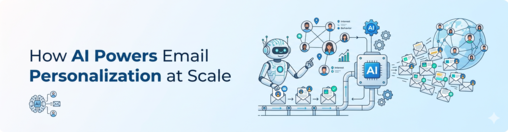
The true power of predictive AI in email marketing is fully realized when it operates as part of an integrated multi-channel marketing system rather than as a standalone tool. Modern customer data platforms and marketing automation systems can synchronize AI-generated insights across email, SMS, push notifications, social media advertising, and on-site personalization to create coherent, cross-channel customer experiences.
Consider a practical scenario: a customer browses your product catalog but abandons without purchasing. The predictive AI system identifies this as high purchase intent, triggers a personalized email with the specific products viewed, simultaneously adjusts the customer’s Facebook ad targeting to show complementary products, and schedules an SMS reminder if the email is not opened within 24 hours. This orchestrated response coordinates multiple channels into a single, seamless customer engagement that significantly outperforms any single-channel approach.
Real-Time Personalization at the Moment of Open
One of the most sophisticated AI email capabilities available today is genuine real-time personalization — where email content is actually rendered at the precise moment a subscriber opens the email rather than when it is sent. This approach, sometimes called ‘live email’ or ‘contextual email’, allows the email to reflect real-time data including current product availability, dynamic pricing, live event countdowns, and personalized recommendations based on the subscriber’s most recent website activity, even if that activity occurred minutes before opening the AI email marketing campaigns.
Live email technology has particularly dramatic applications for e-commerce food brands. A subscriber who opens a meal kit promotion email will see the specific meal options that are currently available for delivery in their postal code, with accurate pricing based on current promotions, and a countdown timer showing exactly how many hours remain to order for next-day delivery. This level of contextual relevance at the moment of open creates a dramatically more compelling and converting email experience than traditional static designs.
Privacy-First AI Email Marketing in a Cookie-less Future
As third-party cookies phase out and data privacy regulations tighten globally, predictive AI email marketing is evolving to operate more effectively on first-party and zero-party data. Zero-party data — information that customers intentionally and proactively share with a brand — is becoming the gold standard for email personalization. Preference centers, interactive surveys embedded in emails, and progressive profiling during signup are powerful mechanisms for collecting the rich first-party data that fuels AI personalization models.
Smart email marketers are building preference management systems that allow subscribers to self-select the types of content, offers, and communication frequency they prefer. This explicit consent-based approach to personalization not only ensures regulatory compliance but actually improves the quality of AI training data, since the personalization signals are direct and intentional rather than inferred from behavioral proxies. Brands that invest in building robust zero-party data strategies today are positioning themselves for sustainable competitive advantage in the privacy-first marketing landscape ahead with AI email marketing campaigns.
Building AI-Ready Email Marketing Infrastructure
The effectiveness of predictive AI in email marketing and email marketing automation AI and machine learning email personalization is directly proportional to the quality and completeness of the underlying data infrastructure. Many brands are eager to implement AI personalization but discover that their data is fragmented across multiple systems, inconsistently structured, or simply insufficient to train effective predictive models. Building AI-ready email marketing infrastructure is therefore a prerequisite investment that must precede AI implementation AI email marketing campaigns.
The foundation of AI-ready email infrastructure is a unified customer data platform (CDP) that consolidates customer information from all touchpoints — website behavior, purchase history, email engagement, customer service interactions, and loyalty program activity — into a single, comprehensive customer profile. Without this unified view, AI models are working with incomplete pictures of customer behavior and generating suboptimal predictions. CDPs like Segment, Tealium, and mParticle are purpose-built to solve this data unification challenge and serve as the data foundation for sophisticated AI email personalization.
Data hygiene practices are equally important. Email lists that contain significant proportions of inactive, bounced, or incorrectly formatted addresses degrade AI model training quality and negatively impact sender reputation. Implementing automated list hygiene routines that regularly validate email addresses, remove persistent non-openers, and suppress unsubscribed contacts ensures that AI models are trained on high-quality behavioral data from genuinely engaged subscribers — producing significantly more accurate predictions than models trained on polluted subscriber data.

Benchmarking and Competitive Intelligence Through AI Analytics
Advanced AI email marketing platforms now offer capabilities that extend beyond campaign optimization to provide broader competitive intelligence and industry benchmarking. By aggregating anonymized performance data across thousands of brands, these platforms can tell you how your email open rates, click-through rates, and conversion metrics compare to industry benchmarks for your specific sector and audience size.
This benchmarking capability transforms email performance data from an internal metric into a strategic competitive tool. Understanding that your open rates are 15% below industry average for your category immediately signals an opportunity to investigate and improve, while discovering that your click-to-conversion rate exceeds category benchmarks validates the effectiveness of your email content and landing page experience. AI-powered competitive intelligence gives marketers the external context needed to accurately interpret their own performance data and make better-informed strategic decisions.
Ethical Considerations in AI-Powered Email Personalization
As predictive AI makes email personalization increasingly powerful, marketers face important ethical responsibilities in how they deploy these capabilities. The same data-driven insights that enable genuinely helpful personalization can, if misused, create experiences that feel intrusive, manipulative, or discriminatory. Responsible AI email marketing requires establishing clear ethical guidelines that govern how customer data is collected, how personalization is applied, and what types of targeting are off-limits regardless of their potential effectiveness.
Transparency with subscribers about how their data informs their email experience is both an ethical imperative and a practical brand-building strategy. Brands that openly communicate their personalization approach and give subscribers meaningful control over their experience consistently build higher trust and engagement than those that personalize invisibly. Simple mechanisms like preference centers where subscribers can indicate their content interests, email frequency preferences, and data usage comfort levels not only respect subscriber autonomy but generate the explicit preference data that makes AI personalization more accurate.
The principle of using AI to serve subscriber interests rather than purely to maximize short-term business metrics should guide all personalization decisions. AI models optimized exclusively for immediate click-through rates may generate personalized content that is technically effective but creates long-term subscriber fatigue or brand distrust. Building AI systems that balance short-term engagement metrics with longer-term subscriber satisfaction and relationship health produces email marketing programs that are both ethically sound and sustainably effective across the full customer lifetime.

AI that forecasts user behavior.
Yes, by 15-25% on average.
AI picks best email send time.
Yes, tools like Mailchimp help.
Real-time behavior-based groups.
Yes, tools like Phrasee do this.
By flagging at-risk subscribers.
Klaviyo or HubSpot are top picks.